Aajonus Vonderplanitz: Life, Books and Death of the Primal Diet Founder
September 22, 2026 · Tobias Winkler
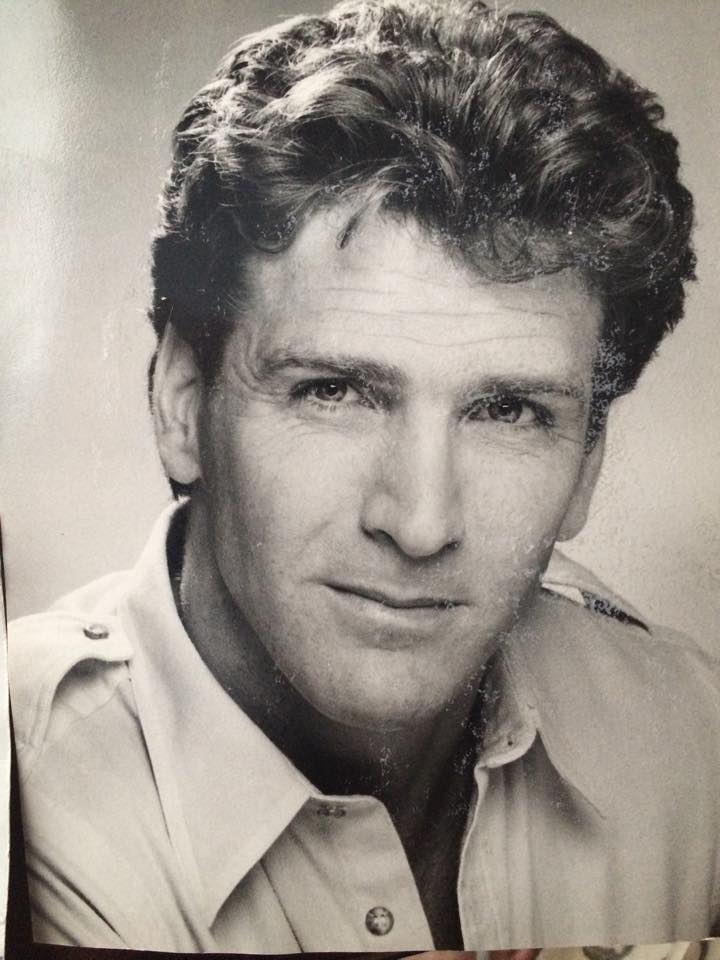
Aajonus Vonderplanitz (1947–2013) was the American author, nutritionist and food-freedom activist who created the Primal Diet: a way of eating built on raw meat, raw dairy, raw eggs, raw fats, fresh vegetable juice and unheated honey. He registered "Primal Diet" as a trademark in 2000, wrote We Want To Live and The Recipe for Living Without Disease, and was one of the people behind the fight to keep raw milk legal in California.
This is his life story, told mostly from his own accounts in the archive of his talks and writings, plus the testimony of the friends who were with him at the end.
If you are here for the diet itself, read our guide What Is the Primal Diet?. This page is about the man.
Quick facts
- Born: John Richard Swigart, 17 April 1947, Denver, Colorado
- Died: 28 August 2013 (Thai time), rural Thailand, after a fall from a balcony
- Known for: creating the Primal Diet, raw milk activism, high meat
- Books: We Want To Live (1997, revised edition 2005), The Recipe for Living Without Disease (2002)
- Organization: Right To Choose Healthy Food, founded 1998
- Trademark: PRIMAL DIET, filed with the US Patent and Trademark Office on 1 November 2000
Childhood: a sick child in a violent home
Aajonus was born John Richard Swigart in Denver. His mother was a nurse, his father an inventor who worked for General Electric. He grew up mostly in Cincinnati, Ohio, one of several brothers, in what he called a violent household that lived on white bread, cereal, potato chips and soda.
His health was poor from the start. In his own telling, his older brother kept pushing him onto rusty objects, so he received a tetanus shot every few months. He traced his autism to one of those shots at 18 months old. Until he was about eight he could not understand language. He learned to parrot phrases he had heard, which made teachers and other children think he was insulting them.
The list of illnesses he described from his youth is long:
- peritonitis at 12, misdiagnosed as appendicitis, and the removal of a healthy appendix
- chronic fatigue from around age eight
- angina from 15, with what he counted as over 300 heart attacks by 22
- juvenile diabetes at 15, with insulin injections
He married at 16, became a father in his last year of high school, smoked two packs of cigarettes a day, drank eleven cups of coffee and a fifth of hard liquor a night to cope with the fatigue. The marriage fell apart and he moved to California.
Cancer and a medical death sentence
In Los Angeles he worked as a computer systems analyst. He had a gift for programming and mathematics even while he still could not read normally.
Then he started spitting blood. Doctors diagnosed an ulcer and gave him antacids. A tumor developed next to the ulcer, and surgeons performed a vagotomy and pyloroplasty, cutting the vagus nerves to his stomach. Afterwards, every time he ate cooked meat he broke out in pustules from his forehead to his knees.
The incision itself turned tumorous. Ten weeks of intensive radiation followed, which he said fused his spine and left him nearly crippled. By around 1968 he had been diagnosed with blood and bone cancer, multiple myeloma. He went through three months of chemotherapy at UCLA, lost his hair and could only crawl across the floor on his elbows. The doctors told him he would die and recommended a hospice.
He refused to leave his home. Two hospice volunteers came by a few times a week to shop and cook for him.
Carrot juice, raw milk and the first recovery
One of those volunteers, an 18-year-old named Steve, brought him carrot juice and raw milk. Aajonus had projectile-vomited cooked vegetables his whole life and did not want to try. When he finally drank the juice, he described it as the best thing he had tasted in a year.
About ten days later, as he told it, his autism "popped off just like a light switch." For the first time he could understand grammar and hold a conversation. He borrowed 110 dollars from Steve, bought every nutrition book he could find, found that they all contradicted each other, and decided to experiment on himself instead.
Raw food was easier to digest. He spent years as a raw vegetarian, eating raw eggs and raw dairy, studying with a nutritionist who tutored him for three and a half years. He relearned how to walk. He also tried returning to donuts and soda several times, and each time the autism came back within a week or so. That was when he became convinced that food decides health.
During these years he also worked as an actor. The biography compiled on aajonus.net lists appearances in soap operas such as General Hospital, which he found ironic given his history with doctors.
Living in the wild and the discovery of raw meat
Around the age of 27 his health started slipping again. He had stopped eating raw dairy and eggs, and the cancer symptoms were returning. He decided that books would not give him the answer and that he had to learn from people and animals that lived without chronic disease.
He set off on a bicycle with four saddlebags full of biochemistry, physiology and anatomy books. Over two and a half years he crossed the United States several times and travelled from the Yucatan up to Alaska, sometimes hopping freight trains when he was too weak to ride. He lived with the Yaqui in northern Mexico, the Maya in the Yucatan, the Sioux in the Dakotas and the Inuit in Alaska.
All four told him the same thing: if he wanted to get well, he had to eat raw meat. He refused. After his stomach surgery, meat meant pustules all over his body, and he had become a committed vegetarian.
With the Inuit he finally ate a golf-ball-sized piece of something they had buried in hides and dug up for a celebration. It was green, black and purple with mold and smelled so bad they had to stuff his nose with musk-soaked cotton. He thought it was an herbal medicine. It was aged raw meat. That night his bone pain eased for the first time in a long while. This was his introduction to what he would later call high meat.
The coyotes and the jackrabbit
Weak, in pain and convinced he had found no answer, he made his way to the desert below Palm Springs to fast himself to death in an old Native American burial ground. His accounts place this in the mid-1970s.
What happened next is the most famous story he ever told. A pack of coyotes kept waking him at midnight. After about two weeks they brought him a freshly killed jackrabbit and left it at his feet. He took it as their way of helping him die quickly, because his uncle had always warned that wild rabbit had to be cooked until burned or it would kill you.
He ate about three and a half pounds of it raw. He felt good, and because the only times he had ever felt good were near-death experiences, he was sure he was dying. He woke up the next morning still alive and with far less pain. Three days passed without cramps, diarrhea or vomiting.
He began eating raw meat and milking local farmers' cows and goats in exchange for food. In two and a half months he gained around 50 pounds. He went back to Los Angeles and started telling everyone to eat raw meat.
A new name
In 1975 he dropped the name John Richard, and with it the nickname "Dick" he had always disliked. During a reading exercise with children, the letters of "John" turned into "Aajonus." He liked the sound and kept it. He replaced Swigart with Vonderplanitz, which he said was the name of ancestors on his father's side.
Saving his son
In September 1986 his son Jeff, then 22, hit a tree at high speed and fell into a coma. The neurologists told the family he would not wake up.
Aajonus went to the hospital and, against the staff's wishes, fed Jeff a mixture of half raw unsalted butter and half unheated honey placed under his tongue. According to his account, Jeff came out of the coma within 24 hours. Aajonus then fed him ground raw meat mixed with honey, and within twelve days Jeff was out of intensive care. This story makes up the first part of We Want To Live.
His books
We Want To Live (1997)
After almost three decades of experimenting, Aajonus published We Want To Live in 1997, with his long-time friend Paul Kruhm as publisher. The first part tells the story of his son's recovery. The second part, Healthfully, is an index of more than 200 conditions with the dietary remedies he used. He said he only included remedies that had worked for at least 85 percent of the people who tried them. A revised edition came out in 2005.
After the book came out, the radio host Dr. Robert Atkins interviewed him on his nationally syndicated show.
The Recipe for Living Without Disease (2002)
His second book is the practical one. It explains how to follow the Primal Diet, why food combining and timing matter, and then gives page after page of recipes: sauces to eat with raw meat, raw dressings, smoothies and desserts like raw cheesecake. Our Primal Diet food list draws heavily on it.
Both books are available to read in the aajonus.net archive. Which one to start with, which editions exist and where to buy them is in our guide to Aajonus Vonderplanitz's books.
Raw milk activist
Aajonus spent the second half of his life fighting for people's right to buy raw food.
- Right To Choose Healthy Food (1998). On 8 August 1998 he founded this non-profit trust to protect farmers whenever health agencies tried to restrict raw milk and other raw foods.
- Private food clubs. With James Stewart he set up a members-only club in Venice, Los Angeles, which Stewart named Rawesome in 2003. Members leased the animals and owned the food, so the clubs sat outside ordinary retail food law.
- Los Angeles, 2000. When Los Angeles County moved to ban raw milk, Aajonus went through the county's report case by case and co-wrote a Supplemental Report in Favor of Raw Milk with Dr. William Campbell Douglass Jr. The ban did not pass. Mark McAfee of the raw milk dairy Organic Pastures later thanked him for "standing up for raw milk in CA in 1999-2000."
- The Primal Diet trademark (2000). On 1 November 2000 he filed PRIMAL DIET as a trademark, years before Mark Sisson started using the word "primal" for his program. How his Primal Diet differs from Mark Sisson's later Primal Blueprint is explained in Primal Diet vs. Primal Blueprint.
- Ripley's Believe It or Not (2001). The show filmed him eating meat he had aged for months, which brought high meat to a worldwide audience.
- The Rawesome raids. Armed agents from several agencies raided Rawesome on 30 June 2010 and again on 3 August 2011, when James Stewart and others were arrested. The raids drew national attention to the raw milk fight.
The Rawesome years ended badly. Aajonus fell out with Stewart and with a supplier, Sharon Palmer, whom he accused of selling conventional food as beyond-organic. He took her to court, and the case ended in a settlement in July 2013, a few weeks before his death.
How did Aajonus Vonderplanitz die?
Aajonus spent much of his last years in Thailand, where he owned a remote farm several hours from Bangkok. He had planned to build a healing center there.
In late August 2013 he stepped onto the second-floor balcony of the house to throw away the fluid he had used to clean a wound on his hand. The railing gave way and he fell around four meters to the ground. Because the farm was so remote, it took hours for an ambulance to reach him.
At the hospital he had broken his back near the first rib and could not move his legs. True to his principles, he took charge of his own care. He allowed one x-ray, refused surgery, had his torso wrapped to stabilize the spine, and kept eating his own food. He was in severe pain and accepted at least two painkiller injections.
On the third day he sent his girlfriend to a court hearing in Bangkok on his behalf. While she was away he slipped into a coma. The doctors reported kidney and blood infections, and his kidneys stopped working. The staff kept giving him butter and honey as he had instructed. When his heart stopped, they tried to resuscitate him for half an hour. He was declared dead at 2 a.m. on 28 August 2013, Thai time, which was noon on 27 August in Los Angeles. He was 66.
The most likely cause, according to the people who knew the details, was internal bleeding from the fall.
Was it really an accident?
Aajonus had many enemies, and he had spoken about earlier incidents he believed were attacks, so rumors of foul play started right away. Some people even claimed he faked his death.
Two friends, Larry Otting and Wasma, flew to Thailand to see for themselves. They visited the farm, saw the broken railing still lying on the ground, talked to the surgeon, saw the x-rays and identified his body. Their conclusion was clear: the house was badly built, the balcony had only a single top rail held by short nails, and the farm was so hidden behind locked gates and rice fields that no stranger could have found it. It was an accident. In a recorded conversation in 2019 they described what they saw, and Paul Kruhm, who had known Aajonus since 1990 and called him "literally my dad," said it had been verified by multiple sources.
Aajonus was cremated and his ashes remain on his land in Thailand.
His legacy
When he died, We Want To Live and The Recipe for Living Without Disease were still selling, thousands of people had consulted him, and the members of his Los Angeles food club met that same weekend to share stories and keep the club running.
More than ten years later, his influence is bigger than ever. His workshops, Q&A sessions, interviews and newsletters have been transcribed and collected by the community at aajonus.net. Rom's biography The Life of Aajonus Vonderplanitz and his free Primal Diet Master Guide at healthfully.ai bring that material together. A good part of what Aajonus worked on was never published, including the detox book he described in his Q&As for years. The campaign at primal-diet.net is working to get it released. A new generation has discovered him through short videos of people eating raw meat and drinking raw milk, and creators like Scott Hall Jr teach his protocol to a wide audience.
Small farms that sell raw milk, the private food clubs, and communities like PrimalMeetup all carry forward what he started: the idea that people have the right to choose real, raw food, and to find each other while they do.
Frequently asked questions
Who was Aajonus Vonderplanitz?
Aajonus Vonderplanitz (1947–2013) was an American author, nutritionist and raw food activist. He created the Primal Diet, wrote We Want To Live and The Recipe for Living Without Disease, and campaigned for legal access to raw milk.
What was Aajonus Vonderplanitz's real name?
He was born John Richard Swigart. He took the name Aajonus Vonderplanitz in 1975.
Who founded the Primal Diet?
Aajonus Vonderplanitz. He developed it from the late 1960s onward and filed "Primal Diet" as a US trademark in 2000, years before Mark Sisson's Primal Blueprint (2009). See Primal Diet vs. Primal Blueprint.
How did Aajonus Vonderplanitz die?
He fell from the second-floor balcony of his house in rural Thailand when the railing gave way, broke his back, refused surgery, and died in hospital a few days later on 28 August 2013, most likely from internal bleeding. Friends who traveled to Thailand confirmed it was an accident.
How old was Aajonus when he died?
He was 66.
What books did Aajonus write?
We Want To Live (1997, revised 2005) and The Recipe for Living Without Disease (2002). Many of his workshops and Q&A sessions are also available as transcripts.
What is high meat?
High meat is raw meat that has been aged in a closed jar until it is full of bacteria. Aajonus first ate it with the Inuit in Alaska and made it part of the Primal Diet. His recipe and what he said about it are in our article on high meat.
Is PrimalMeetup affiliated with Aajonus?
No. PrimalMeetup is an independent community for people who follow or are interested in his Primal Diet.